


Tarteel: AI Quran Memorization
4.61.72K Reviews
App Specs
- Version
- 5.81.1
- Updated On
- License
- Free
- Downloads
- 10,000,000+
- Developer
- Tarteel Inc.
- Categories
- Books & Reference
- Platform
- Android, iOS
Screenshots
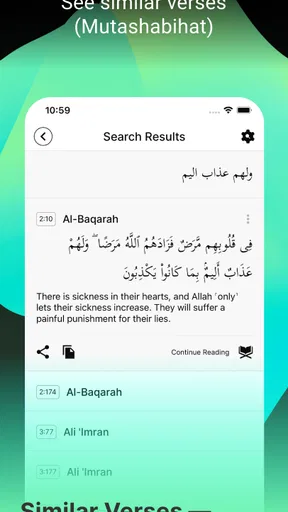
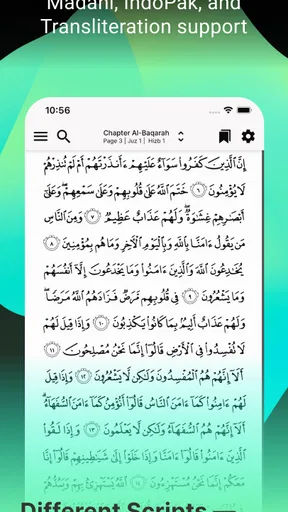
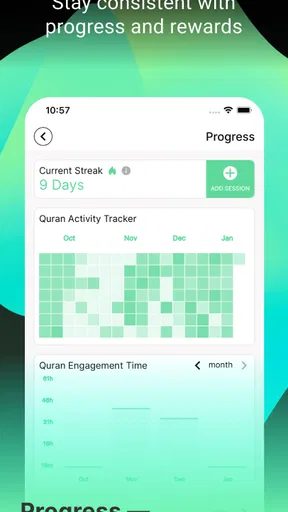
 Analysis by AppCompare
I’d decide whether Tarteel: AI Quran Memorization is right for me by asking one practical question: do I want a tool to listen while I recite, or am I mainly looking for a digital Quran to read? Tarteel is most compelling for the first need. Its focus on spoken practice can make short, regular review feel more purposeful, while a reader-first app or a printed mushaf may suit someone who prefers to study quietly without a device listening.
That distinction matters because memorization is personal. Some learners want frequent prompts and a visible record of progress; others prefer to work with a teacher, a study partner, or their own notebook. I see Tarteel as a useful companion to those habits, not a replacement for careful study or human guidance. The best fit is someone who already recites aloud and wants an extra way to notice where practice needs attention.
Choose it for recitation practice, not just reading
As a Books & Reference app from Tarteel Inc., it puts recitation and memorization at the center of the experience. The app’s voice-based feedback is the key reason to try it: instead of only looking at text, you can recite and use the response as a prompt to review. That can be especially helpful when you know a passage but want to test whether you can continue without relying on the page.
It is free to download, with in-app purchases listed from $12.99 to $249.99 per item. I would treat that as a reason to explore the basic experience before paying for anything, then decide whether the paid options match a real need in your routine. The app is rated for Everyone, has a 4.7 average from around 102,000 ratings, and has passed 10 million installs. Those figures suggest broad interest, but they don’t guarantee that its approach will suit every learner.
A realistic use case is a brief review between other parts of the day. I might choose a passage I have been learning, recite it aloud, and use any feedback as a signal to pause and revisit a difficult stretch rather than pushing through automatically. That turns a spare moment into focused practice. For longer sessions, I would still keep a clear goal—such as reviewing one familiar section—so the app supports a plan instead of becoming the plan.
Where the listening approach helps—and where it needs care
The biggest advantage over a standard Quran-reading app is that reciting becomes an active check rather than a purely visual exercise. A printed copy or a screen full of text is excellent when I want to read at my own pace, but it cannot listen as I try to recall a passage. Tarteel’s feedback makes that self-test easier to build into a routine, especially when no study partner is available at that moment.
Still, I would not treat automated feedback as a final authority on every detail of recitation. A tool can help draw attention to a possible slip, but learners who are working on precise pronunciation, tajwid, or a new passage should continue to seek qualified instruction when they can. If the feedback feels unclear, I would slow down, compare my recitation with a trusted teacher or resource, and avoid changing a well-established practice solely because an automated prompt surprised me.
Worth Reading Before You Choose

Baby Panda World Brings Quick Play to Modern Phones, but Its Game Library Feels Busy

ESPN’s Live Game View Makes Following Close Games Easier

QuizzLand Review: A Good Fit for Short Trivia Breaks, Not Every Player

Basketball Stars: Multiplayer Is Fast, but Can It Recover When Matches Go Wrong?

WEBTOON Turns Phone Updates Into a Better Reading Routine

Link to Windows Runs on Shared Habits, Not Social Feeds
Practical details before you settle into a routine
The current version is 5.76.0, and the stated minimum operating system is 7.0. I would check that my device meets that requirement before planning to rely on the app every day. Since recitation is central, a quiet spot and a phone microphone that can pick up my voice clearly are practical considerations; background conversation or a rushed, very soft recitation may make a listening-based session less useful.
There is also a small habit change involved: the phone must be present, and you need to be comfortable reciting to it. That is convenient at home or during a planned study break, but not ideal in every setting. Someone who wants to memorize without screens, or who prefers a live teacher to respond to questions and explain a correction, may be better served by a book, a class, or a combination of those options with an app.
First Impressions and User Interface
When I first opened the app, the clean and intuitive interface immediately caught my eye. It’s got this sleek design that makes navigation a breeze. You know when an app feels just right? That’s Tarteel for you. Everything's laid out in a way that makes sense, so you don’t have to dig through endless menus. You can just dive in and start using it.
One of the things I love is the color scheme. It's easy on the eyes, which is pretty important when you're staring at your screen for a while. Plus, the text is crisp and clear, making it simple to read through the verses.
Features That Stand Out
Alright, let’s talk features. Tarteel: AI Quran Memorization has some pretty nifty tools that make it a standout app. First up, the voice recognition feature. This is where the app’s AI shines. You recite a verse, and the app listens and gives you feedback on your pronunciation and memorization. It’s like having a tutor right in your pocket!
The app also tracks your progress. You can see how much you’ve memorized and what you need to work on. It’s like having a personal coach who keeps you on track. One cool feature is the ability to set goals and reminders. This is perfect for someone like me who needs that extra nudge to stay consistent.
Learning Experience
Using Tarteel feels less like studying and more like an engaging experience. The interactive elements keep you hooked. I found myself getting into a flow state, reciting verses and checking my progress. The feedback is immediate, which is super helpful for correcting mistakes on the spot.
You can also choose specific sections to focus on, making it easier to tackle the Quran in manageable chunks. Whether it’s a few verses or an entire surah you’re working on, the app adapts to your pace.
Community and Support
What’s great about this app is not just the tech but the community aspect. You can connect with others on the same journey. There are forums and discussion boards where users share tips and encouragement. It’s like being part of a global study group.
If you ever get stuck, the support team is pretty responsive. I reached out with a couple of questions and got helpful replies in no time. It’s always nice to know there’s a support system behind the app.
Final Thoughts
In a nutshell, Tarteel: AI Quran Memorization is a gem for anyone serious about memorizing the Quran. It combines technology with tradition in a way that feels natural and supportive. Whether you’re just starting or looking to refine your memorization skills, this app is worth checking out.
So, if you’re ready to take your Quran memorization to the next level, give Tarteel a try. It’s like having a mentor, study buddy, and personal cheerleader all rolled into one. Happy memorizing!
A routine that makes feedback useful
I would get more from a session by separating recall practice from correction. First, recite a passage without trying to follow every word on the screen. Then use the app’s response to identify a spot worth repeating, rather than restarting the entire section after every stumble. This keeps the exercise focused on memory and makes feedback easier to act on. It is a simple workflow, but it avoids turning a review into a cycle of constant interruption.
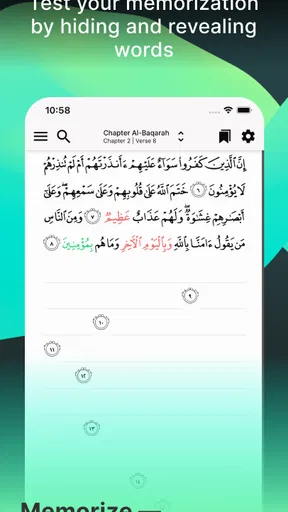
For a newer memorizer, I would begin with a short, familiar portion and repeat it over several sessions before making the task harder. For someone who already knows a passage, the more revealing test is to recite it after a gap or begin from a selected section instead of always starting at the beginning. That helps expose whether recall depends on a fixed sequence. Tarteel is useful for these self-checks, although the learner still has to choose a sensible pace and decide what needs attention.
Who will benefit most from the format
I think it is best suited to people who already have a recitation habit and want a convenient way to practise independently. A learner balancing study with work or family responsibilities might use a short session during a quiet break, then return to the same material later. Someone who feels nervous reciting in front of others may also value private practice as a low-pressure first step before reading to a teacher or group.
It is less suitable for a person who mainly wants a reference library, detailed religious explanations, or a teacher who can discuss the reason behind a correction. The app’s central value is the listening-and-practice loop, not replacing every other kind of Quran study. If your priority is understanding commentary or asking questions in real time, a dedicated reference source or instruction with a knowledgeable person is the more direct choice.
How it compares with familiar alternatives
Compared with a printed mushaf, Tarteel adds a listening-based check and progress-oriented practice, while the book offers a distraction-free page and does not depend on a phone. A conventional Quran app may be more suitable for reading or looking up text when you do not want to recite aloud. A human study partner can respond naturally and offer context, but may not be available whenever a brief review fits into the day. These options solve different problems, so I would choose based on the session I actually want rather than expecting one tool to cover them all.
A practical compromise is to use the app for solo recall, then keep a teacher or trusted reciter as the reference for questions of pronunciation and recitation. I would also avoid judging progress only by a streak or a completed practice session: the useful measure is whether I can recall the passage more steadily and notice which parts still need work. That keeps the technology in its proper role—as a practice aid, not a substitute for learning well.
What to consider before making it part of daily study
Before settling into a routine, I would test the experience in the place where I expect to use it. A quiet room is more suitable than a busy commute, and speaking clearly is more practical than trying to recite under my breath. If I share a room or have limited privacy, I might prefer a book for that session and save the app for a better moment. These small details affect whether a voice-led tool feels helpful or inconvenient.
I would also start without assuming that every available option needs to be used. Try a focused recitation session, see whether the feedback makes sense, and decide whether tracking and reminders actually encourage consistency. The free download makes that initial decision straightforward, while the range of in-app purchases means it is sensible to understand what an upgrade offers before spending. I would pay only if a specific feature solves a recurring problem in my study, not simply because it is presented as the next step.
A grounded recommendation
My recommendation is strongest for a learner who wants an accessible way to test memorization aloud, revisit chosen sections, and build a regular review habit. The app has a 4.7 average and has attracted over 10 million installs, but the more relevant question is whether its recitation-first approach fits how you learn. Its Everyone age rating also makes it broadly accessible, though parents and learners should still choose study tools according to their own needs and routines.
If you prefer silent reading, need extensive explanation, or want corrections from a qualified person, I would not make this your only resource. If you already study with a teacher, it can sit alongside that instruction as a convenient way to practise between sessions. That combination is where I see the clearest value: use the app to encourage repetition and self-checking, and use human guidance for nuance and questions that software cannot resolve.
Overall, I would give it a try if spoken Quran practice is already part of your life or something you want to build. Keep your first sessions small, use feedback as a reason to review rather than an unquestionable verdict, and let your own learning goals determine whether the paid options are worthwhile. For the right learner, it offers a focused companion to memorization; for everyone else, a straightforward reading app, a printed copy, or a teacher-led routine may be a better match.
Pros
- Enhances Quran memorization effectively.
- Interactive AI-driven learning experience.
- Voice recognition for accurate feedback.
- User-friendly interface with easy navigation.
- Offline mode for uninterrupted access.
Cons
- Limited free features in basic version.
- Requires stable internet for full access.
- Voice recognition may struggle with accents.
- Lacks social sharing options.
- No dark mode for low-light reading.
FAQs for Tarteel: AI Quran Memorization
What is Tarteel: AI Quran Memorization and how does it work?
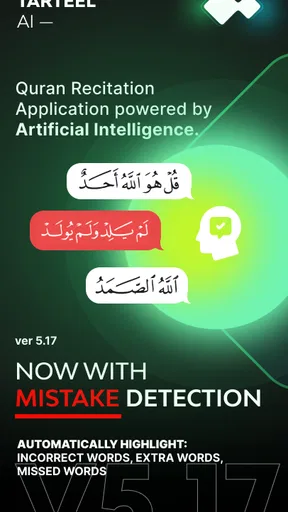
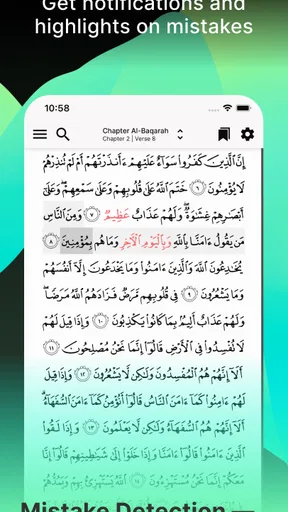
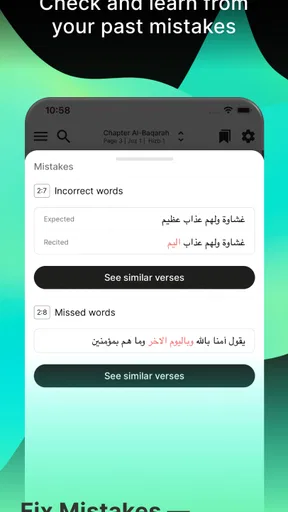
Tarteel: AI Quran Memorization is an innovative app designed to assist users in memorizing Quranic verses. It uses advanced AI technology to listen to your recitation and provide instant feedback, highlighting mistakes and areas for improvement. This interactive approach makes learning efficient and engaging, catering to users at all levels.
Is Tarteel suitable for beginners in Quran memorization?
Yes, Tarteel is suitable for users of all proficiency levels, including beginners. The app offers step-by-step guidance and personalized feedback, making it easy for new learners to start their journey in Quran memorization. Additionally, its user-friendly interface ensures that even those new to technology can navigate it with ease.
Does Tarteel require an internet connection to function?
Tarteel primarily requires an internet connection to access its AI-powered feedback features. However, some offline functionalities might be available, such as reviewing previously downloaded content. For optimal performance and access to real-time feedback, it's recommended to use the app while connected to the internet.
Are there any subscription fees or in-app purchases in Tarteel?
Tarteel offers a range of features for free, but it may also include premium features accessible through in-app purchases or subscription plans. These premium options typically provide enhanced functionalities, such as advanced analytics and personalized learning paths. It's advisable to check the app's pricing details within the app store for the most current information.
How does Tarteel ensure user privacy and data security?
Tarteel is committed to maintaining user privacy and data security. The app employs robust encryption and data protection measures to safeguard your personal information. Audio recordings used for feedback are typically processed securely and are not stored permanently, ensuring your recitations remain private. Always review the app's privacy policy for detailed information.


